Residential tile installation
Residential floors, entries, kitchens and measured layouts.
Residential tile installation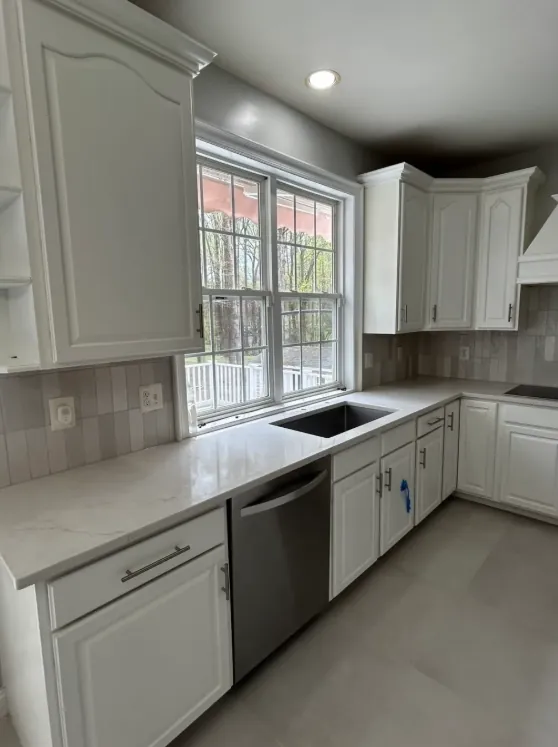
A tile floor is only as good as what is under it. The two common bases are a concrete slab and a wood subfloor, and each one gets checked for different problems.
Concrete takes tile well once it has been checked. We look for cracks, high and low spots, old paint or sealer that would keep mortar from bonding, and any sign of dampness. A floor that gets wet after heavy rain needs the water problem fixed at its source first. Tile laid over it would only hide the problem.
Over wood, the concern is movement. A floor that flexes or squeaks underfoot will crack grout and eventually tile. The fix may be added screws, a second layer of plywood or an underlayment made for tile. Old vinyl, carpet glue and loose tile come up before any of that.
An entry takes grit and wet shoes. A textured tile with a mid-tone grout hides everyday dirt better than glossy tile with white grout. Where the tile meets wood or carpet, the transition strip and the height difference are settled before the first tile goes down.
Stairs down to a lower level can be tiled as well. Each tread edge needs a bullnose piece or a stair-nosing trim so the front edge is not a raw cut.
Picked from our project index.
| Photo | Project | Room | Tile and pattern | Town |
|---|---|---|---|---|
| White cabinetry kitchen with gray rectangular backsplash | Kitchen | Gray rectangular backsplash tile | Chicago area |
 | Marble-look bathroom with dark wood floor | Bathroom | Marble-look tile; dark wood floor | Chicago area |
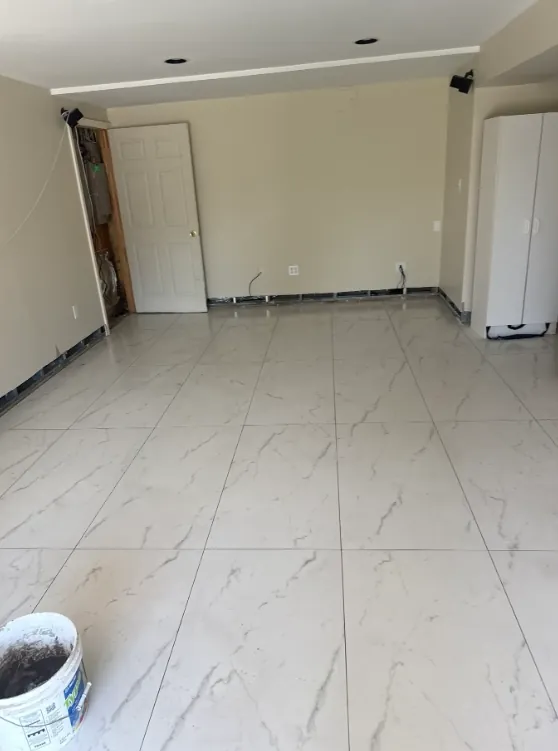 | White marble-look tiled interior under construction | Interior rooms | White marble-look tile | Chicago area |
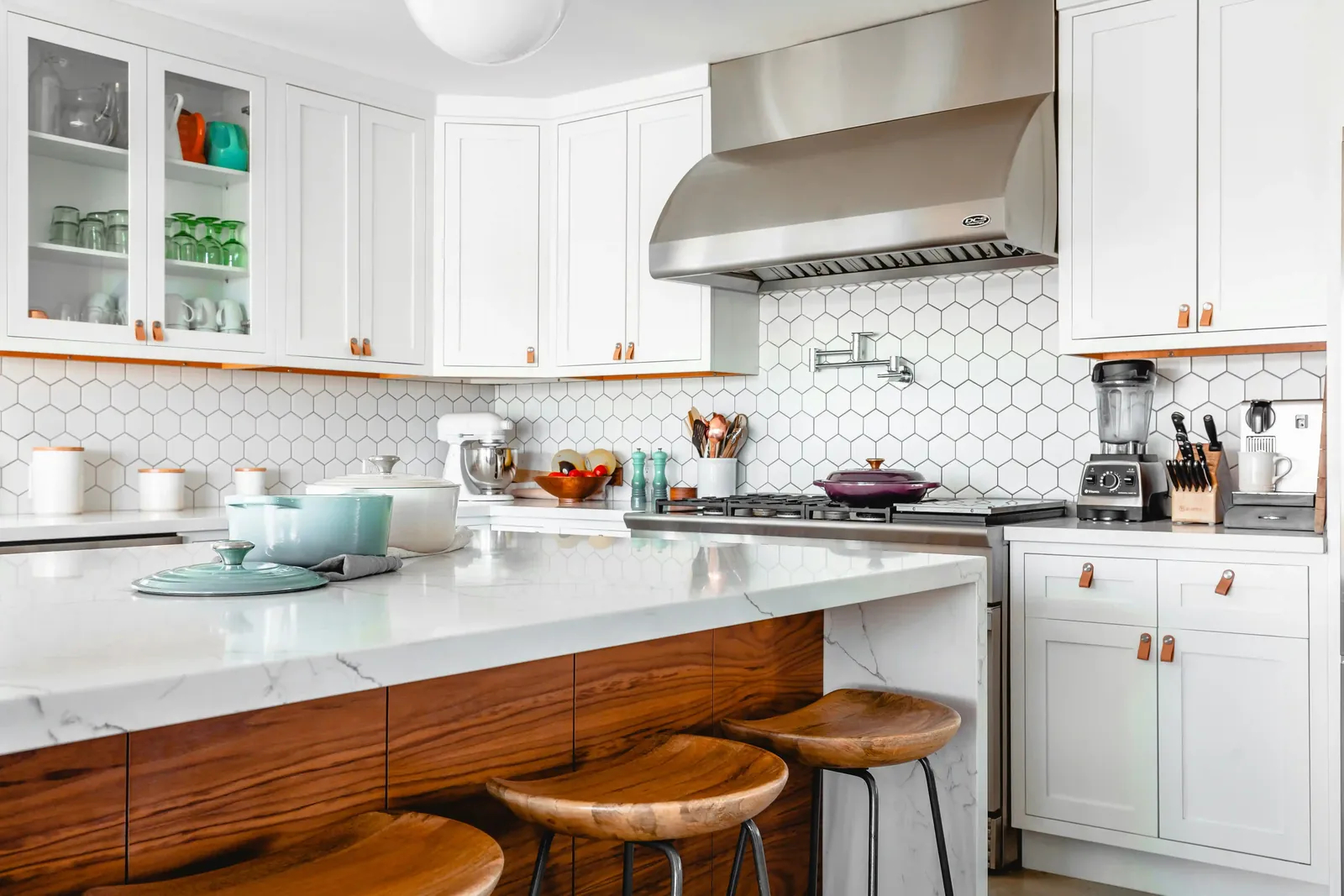 | White hexagonal kitchen backsplash | Kitchen | White hexagonal backsplash tile with dark grout | Chicago area |
Residential floors, entries, kitchens and measured layouts.
Residential tile installationTile surfaces planned around durable, usable rooms.
Commercial tile installationWalls, floors, shower surfaces, niches and benches.
Bathroom and shower tileDemolition, substrate checks, leveling and a clean starting plane.
Tile removal and floor prepYes, once the slab is dry, sound and flat enough. An active water problem has to be solved before any finish floor goes in.
No. It depends on whether the base is concrete or wood, how flat and stiff it is, and what the tile maker requires. Some floors need a membrane or backer board; others are ready after cleaning and patching.
That depends on the mortar and grout. Each product lists its own cure time, and the floor should stay clear until the slowest one has cured.
Tell us what the floor is now and what you want on it.
(872) 217-9211[email protected]