
We tile shower walls and floors, tub surrounds, bathroom floors, niches, benches, vanity backsplashes and wainscots in Chicago-area homes. Some jobs are just a floor or a tub surround. Others are part of a full shower rebuild.
A shower is built in layers: framing, backer board, a waterproofing layer, the drain connection, a sloped pan and, last, the tile. Tile and grout are the finish. They do not keep water out of the wall or floor on their own, so each layer below is checked before tile goes up.
What’s included
| Item | What we do | Notes |
|---|---|---|
| Room review | We check framing, existing finishes, fixture positions, floor height, door clearance and the toilet flange. | The scope lists every surface getting tile and the prep around it. |
| Framing and backer | We correct framing so walls are plumb and flat, then install foam or cement backer board. | Loose, damaged or wet material is dealt with first. |
| Waterproofing and pan | We build a continuous waterproofing layer and slope the pan to the drain. | Seams, corners, curbs, niches and pipes follow the product instructions. |
| Tile, grout and sealant | We set wall and floor tile, grout, and use flexible sealant at changes in plane. | The shower stays unused until everything has cured. |
Materials we work with
| Material | Where it goes in a bathroom | Notes |
|---|---|---|
| Porcelain | Bathroom floors, shower walls, shower floors | Underfoot, choose a surface rated for wet floors. |
| Ceramic | Shower and bathroom walls, backsplashes | A wall tile may not suit a shower floor. |
| Large-format porcelain | Bathroom floors and shower walls | Walls and floors must be flat or the edges will not line up. |
| Natural stone | Floors, walls, some wet areas | Support, cutting, setting material and sealing are checked per stone. |
| Mosaic | Shower floors, niches, borders | Small pieces follow the pan’s slope. |
| Glass | Accent walls and backsplashes | Mortar and method follow the glass maker’s instructions. |
Waterproofing and backer board
Waterproofing runs as one continuous layer across the shower walls and pan. The weak points are corners, seams, fasteners, pipe penetrations, curbs, niches and benches, and each is detailed the way the product maker specifies. We do not mix products from different systems unless they are meant to work together.
Foam backer board is light and can be part of a waterproof wall when its seams, fasteners and penetrations are treated as its maker specifies. Cement board is a rigid tile backer, but in a shower it still needs a compatible waterproofing method over it. Either board has to give a flat surface. Large tile, stacked patterns and trim pieces show every wave in a wall.
Shower pans and drains
The pan is sloped so water runs to the drain instead of sitting on the floor. Drain type and location, the shower’s footprint, the curb or entry, and the floor tile all shape the pan. We settle these before any wall tile goes up, because the floor cuts affect the walls around them.
Shower floors often get small tile or mosaic, since the extra grout joints let the tile follow the slope. The product still has to be rated for wet floors. A dry layout shows how the tile will meet the drain, the corners and the edges.
Niches, benches and curbs
We plan a niche around the studs, the plumbing, the waterproofing and the tile layout, and fix its size and position before wall tile starts. Lining its edges up with grout lines avoids thin slivers of tile. The niche floor slopes toward the shower so it cannot hold water.
Bench seats, window returns and other ledges inside the shower slope the same way. Curbs and low thresholds affect both water control and the finished floor height. Exposed edges get a trim profile, bullnose, a mitered corner or another edge that suits the tile.
Layout and joints
We start the layout from what you see first: the valve centerline, the curb face, a niche, the vanity or the doorway. Room sizes are measured on site, since they can differ from drawings and nominal fixture sizes.
Running bond, stacked, diagonal, herringbone and mosaic patterns cut and align differently, so direction, joint width and accent placement are fixed before setting. Inside corners, changes in plane and edges against other materials get a flexible joint, not grout alone.
Grout, sealer and aftercare
Grout products differ in how they go in and how they are cleaned, and joint width, tile edge and texture change how the grout looks. Penetrating sealer suits some stone, grout and porous tile. Plenty of surfaces neither need it nor take it.
Use the bathroom only after mortar, grout and sealant have cured for the time their makers state. Clean with a nonabrasive product made for the tile and grout. Strong acids, scouring powder and hard tools can dull or damage grout, stone, glazed tile, metal trim and sealant. Every so often, look at the sealant joints, grout, tile edges and plumbing trim for gaps, stains or damp that does not dry out.
What drives the cost
Cost follows the shower’s size, demolition, framing repairs, plumbing coordination, waterproofing and the drain detail. Mosaic, busy patterns, inserts, stone and trim pieces add cutting and waste. Changing a fixture, the layout, the pattern or the tile after prep has started means a revised scope.
Related projects
Bathrooms and showers we have tiled in Chicago-area homes.
| Photo | Project | Room | Tile and pattern | Town |
|---|---|---|---|---|
| White veined-tile bathroom with corner tub and shower | Bathroom | White veined tile; mosaic floor | Chicago area |
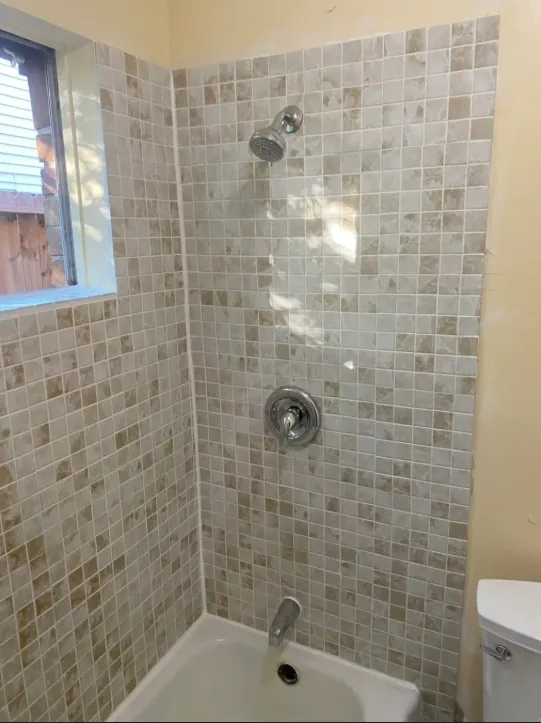 | Small square-tile bathtub surround | Bathroom | Small beige and gray square tile | Chicago area |
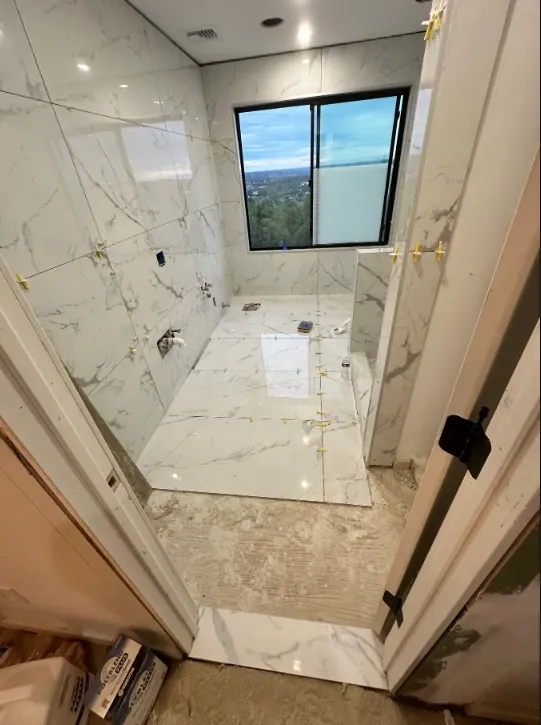 | Windowed bathroom renovation stages | Bathroom | Beige tile to white veined tile | Chicago area |
 | White marble-look bathroom tile installation | Bathroom | White marble-look tile; hex niche | Chicago area |
 | Marble-look bathroom with dark wood floor | Bathroom | Marble-look tile; dark wood floor | Chicago area |
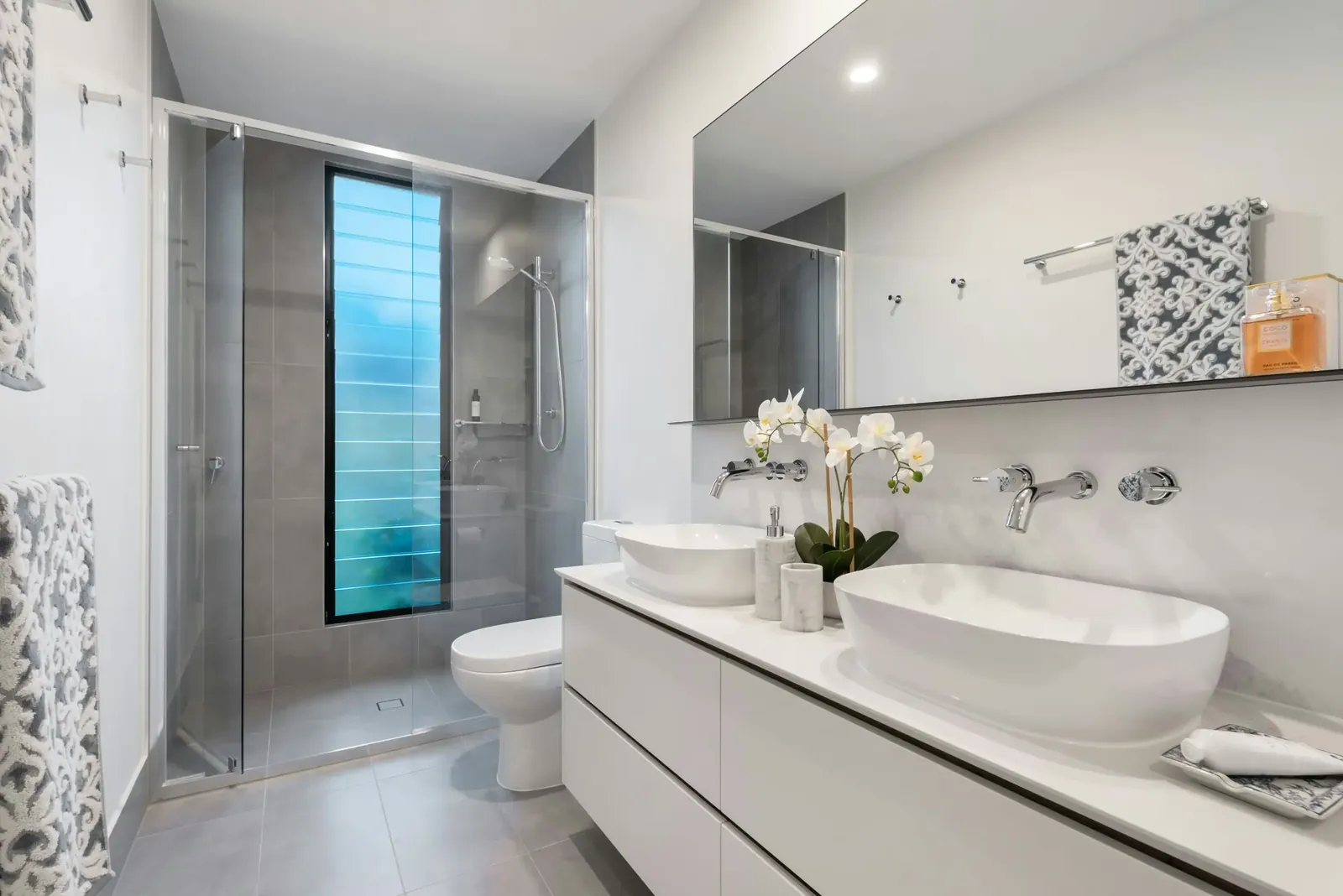 | White bathroom with gray floor tiles and a narrow window | Bathroom | Gray rectangular floor tiles | Chicago area |
Areas we serve
Questions we get
Does shower tile make a shower waterproof?
No. Tile and grout are the finish. The waterproofing layer behind and under the tile keeps water out, and it has to be detailed at seams, corners, penetrations and the pan.
Is cement board waterproof?
Not on its own. It is a tile backer, and in a shower it needs a compatible waterproofing method over it, installed to the product instructions.
Why is shower-floor tile often smaller than wall tile?
Small tile follows the slopes that carry water to the drain more easily. It still has to be rated for wet floors and laid out with the pan and drain.
Can a shower niche be added anywhere?
Not always. Its position is checked against the studs, plumbing, waterproofing and tile layout. The opening cannot weaken structure or cut into services, and its floor needs a slope.
Does all bathroom grout need sealer?
No. It depends on the grout or tile and what its maker says. The sealer and when to apply it are chosen for the materials actually installed.
What should be considered before selecting bathroom tile?
Where the tile goes and whether it is rated for wet use, its texture, how it cleans, edge and trim options, the grout, the condition of the walls and floor, and the room layout.
Tell us about the room
Share the surface, the room and what you are considering.
(872) 217-9211[email protected]